AI Staging Style Guide: Attract More Buyers
Stop guessing. Learn how choosing the right virtual staging style—from Scandinavian to Industrial—connects with buyers and increases your property's value.
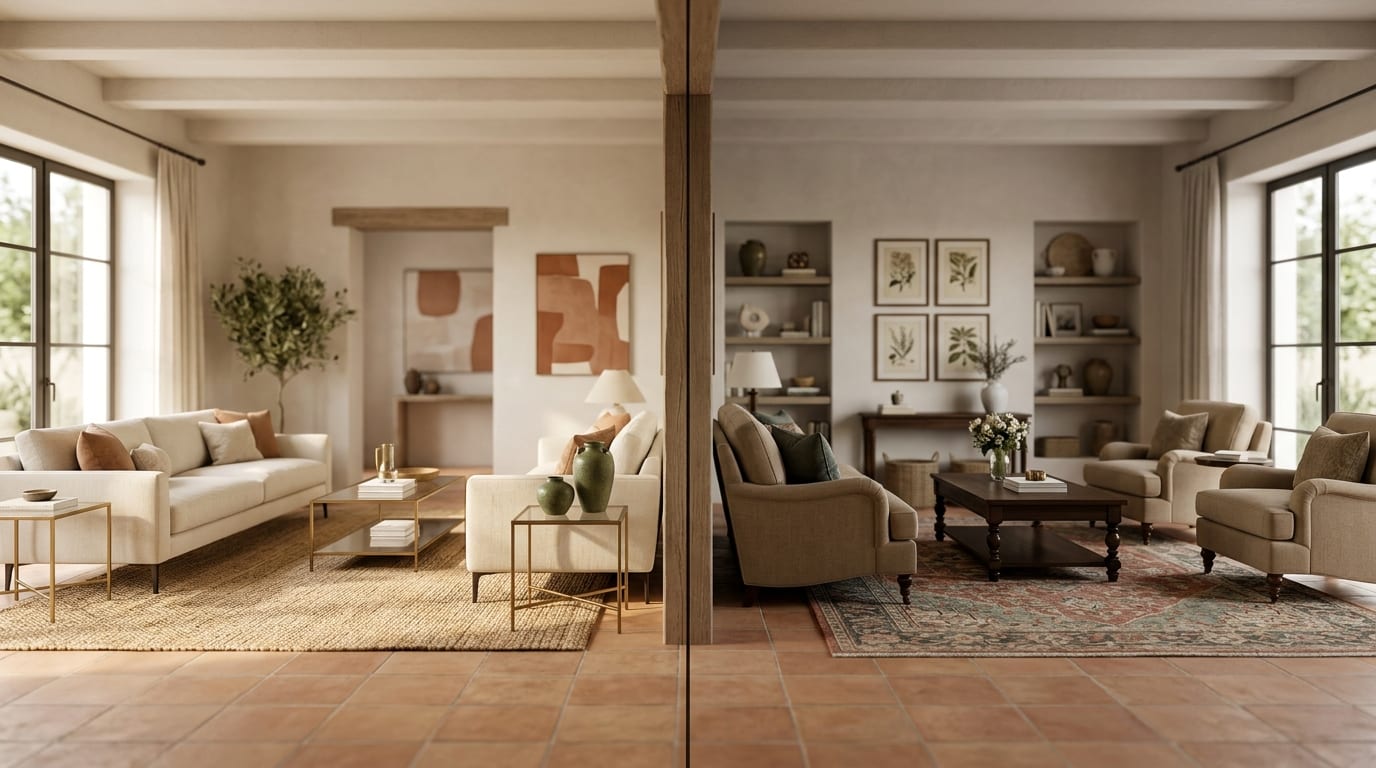
An empty listing sells space; a strategically styled one sells a future. Choosing the right virtual staging style isn't about decoration—it's about creating an emotional connection that helps your target buyer envision their life in the property, driving faster offers at a higher value.
Why Your Style Choice Dictates Sales Success
Generic virtual staging is a missed opportunity. The goal is to match the interior design to the ideal buyer's aspirations. A sleek, modern style appeals to young professionals in a city center apartment, while a warm, Scandinavian design resonates with families looking for a comfortable suburban home. This alignment instantly increases perceived value and helps a listing stand out in a crowded market.
Using AI for real estate marketing transforms this from an expensive gamble into a data-driven decision. Instead of paying a designer €30-€40 per image for one look, you can generate multiple styles in minutes, testing what truly works for your listing and demographic for a fraction of the cost.
How to Choose the Right Virtual Staging Style: A 3-Step Playbook
Follow this framework to select a design style that converts viewers into buyers.
Step 1: Analyze the Property's Architecture
The home itself provides the canvas. Look at its core features: window size, ceiling height, flooring, and fixed elements like kitchen cabinets or fireplaces. A warehouse conversion with exposed brick and ductwork naturally lends itself to an Industrial style, whereas a new build with clean lines and large windows is perfect for a Modern or Japandi look. Don't fight the architecture; enhance it.
Step 2: Define Your Target Buyer Persona
Who is the most likely buyer for this property in this location? Consider their age, lifestyle, and income.
- Young Professionals: Value minimalism, function, and tech-friendly spaces (Modern, Industrial).
- Growing Families: Seek comfort, durability, and warmth (Scandinavian, Transitional).
- Luxury Buyers: Expect sophistication, quality materials, and a bespoke feel (Contemporary, Mid-Century Modern).
Tailoring the style to their tastes makes the property feel like it was designed just for them.
Step 3: Test and Iterate with AI Virtual Staging
This is where modern agents gain a decisive edge. Instead of commissioning a single, costly design from a human virtual staging agency, use an AI platform like GetRestage to experiment. For the cost of just 2 credits (as low as €0.36 on a Studio plan), you can render a photo in multiple styles.
Upload an image of an empty room and generate one version as Scandinavian and another as Modern. Compare them side-by-side. You can even A/B test different styles on the property portal to see which one gets more clicks and inquiries. This data-backed approach removes guesswork and maximizes your marketing ROI.
Virtual Staging Interior Design Styles: A Comparison
Use this table to quickly match a property and buyer persona to the most effective virtual staging style.
| Style | Key Characteristics | Best For Property Type | Target Buyer Persona |
|---|---|---|---|
| Scandinavian | Light wood, neutral colors, minimalism, cozy textures (hygge), natural light. | Apartments, family homes, new builds. | Young families, first-time buyers, minimalists. |
| Industrial | Exposed brick, metal accents, raw materials (concrete, wood), neutral color palette. | Lofts, warehouse conversions, modern urban apartments. | Young professionals, creatives, singles/couples. |
| Modern | Clean lines, simple color palette, use of metal and glass, uncluttered spaces. | New builds, city condos, architect-designed homes. | Affluent professionals, design-conscious buyers. |
| Mid-Century Modern | Organic shapes, functionality, wood tones, bold accent colors, iconic furniture. | Homes built 1940s-1960s, ranch-style houses, contemporary homes. | Design enthusiasts, buyers seeking character. |
| Japandi | Hybrid of Japanese and Scandinavian. Functional minimalism, natural materials, neutral tones. | Any property where a calm, serene atmosphere is desired. | Wellness-focused individuals, minimalists, luxury buyers. |
Frequently Asked Questions
What is the most popular virtual staging style?
Scandinavian and Modern are consistently the most popular styles for their broad appeal. They create a clean, bright, and aspirational look that resonates with a wide range of buyers, making them a safe and effective choice for most residential properties.
Can AI virtual staging match a specific design brief?
Yes. Advanced AI tools like GetRestage allow you to guide the output. You can select specific styles, room types, and even use text prompts to refine the furniture, color palette, and overall mood, giving you significant creative control over the final result.
How much does it cost to virtually stage in different styles?
With traditional human staging services, the cost is fixed per photo (€15-€40+), regardless of style. With a credit-based AI platform like GetRestage, you can generate multiple style variations for the same room for the same low cost, making experimentation highly affordable.
Next Steps
Choosing the right virtual staging style is a strategic marketing decision that directly impacts buyer engagement and final sale price. By aligning the property's architecture with the target buyer's aspirations, you create a powerful emotional pull that generic staging can't replicate.
Stop leaving buyer connection to chance. Generate multiple high-converting styles for your next listing in minutes. Sign up for GetRestage and see how quickly you can elevate your property marketing.
Next step
Stage your next listing with Restage.